
AI vs Manual Work in 2026: Efficiency Audit, ROI Analysis & AI-First Workflow Transformation
Discover how AI outperforms manual work in 2026 with data-driven efficiency audits, ROI analysis, and AI-first workflow transformation. Learn how organizations reduce costs, improve accuracy, and scale operations using intelligent automation and agentic AI.
LINO Consulting & Research GmbH
4/28/20265 min read
The Shift from AI Debate to Data-Driven Efficiency Measurement
Organizations are moving beyond debating whether AI can improve operational efficiency and are now auditing where AI outperforms manual work in measurable terms. The efficiency audit across technology, operations, audit, finance, tax, and compliance reveals one clear pattern: AI workflow automation is no longer confined to experimentation. It is increasingly being applied to repetitive, rules-based, and data-intensive work that was once handled through manual processes, shared services, and entry-level analysis.
The latest evidence from BCG, Deloitte, McKinsey, PwC, Thomson Reuters, and academic research on business process automation and AI adoption suggests that the real shift is not simply robotic process automation (RPA) or basic automation. It is the fundamental redesign of workflows around AI-first operating models and agentic AI systems, with material implications for cost reduction, accuracy improvement, scalability, and workforce structure transformation.
Key Audit Findings: The comparison between AI and manual processes shows that intelligent automation delivers measurable ROI in high-volume work, compliance monitoring, financial analysis, and risk assessment.
Manual Processes Losing Ground: AI Scaling & Performance Metrics
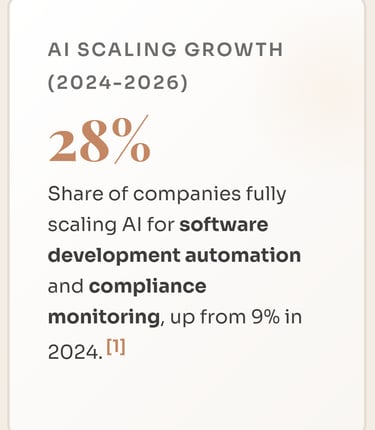
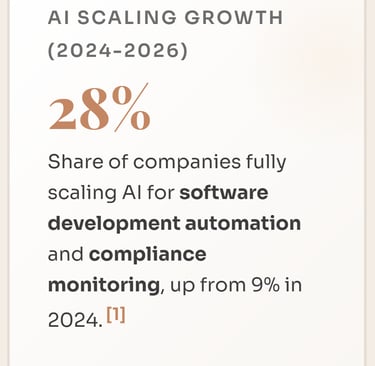
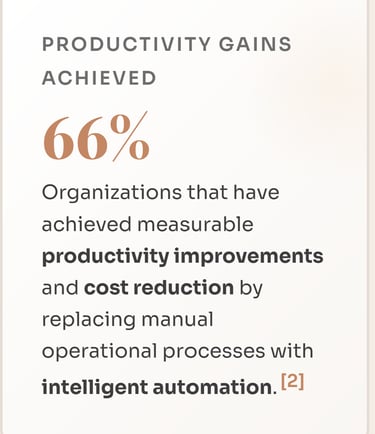
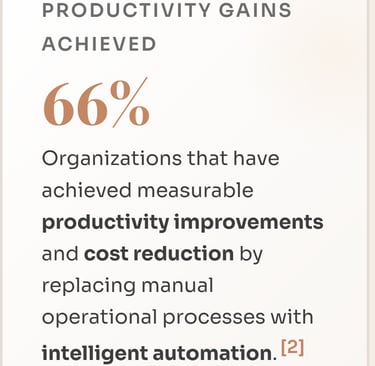
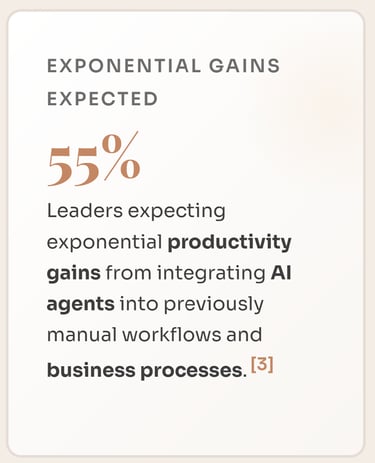
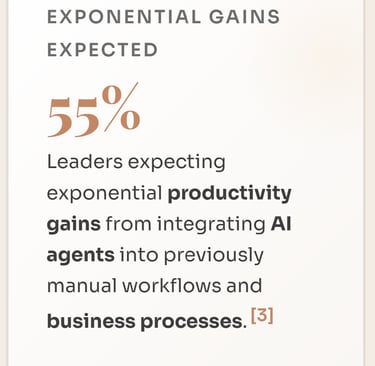
One of the clearest findings in the current AI efficiency audit is that organizations are scaling AI-powered automation in workflows previously dominated by manual effort. The evidence is compelling and accelerating across enterprise operations.
These statistics signal that AI-enabled workflows are moving from isolated pilots into mainstream operating practice. The AI vs. manual comparison is increasingly being settled in areas where work is repetitive, process-heavy, and dependent on large volumes of structured or semi-structured information. Organizations implementing process automation solutions are seeing faster execution, improved accuracy, and better scalability compared to manual operations.
Workflow Redesign Drives Biggest Gains: From AI Pilots to AI-First Operations
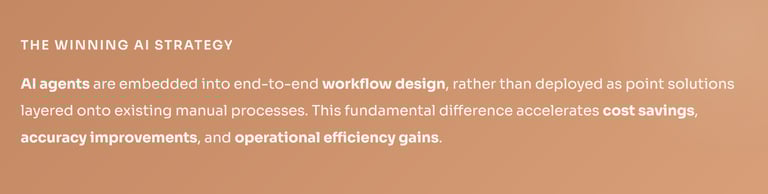
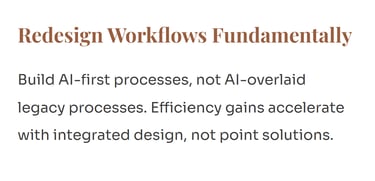
The most important distinction in enterprise automation is between adding AI to legacy processes and fundamentally rebuilding processes around AI-first architecture. Organizations achieving the strongest ROI from AI investments are not simply layering intelligent automation onto existing manual workflows. They are redesigning workflows at the foundational level through end-to-end process optimization.
McKinsey points to a broader organizational transition from human-only shared services centers to AI-first operating centers. PwC describes this shift as a "disciplined march to value," particularly in finance automation, tax compliance, and internal audit processes. In these functions, the move toward agentic AI systems is not framed as experimentation for its own sake. It is targeted at specific operational pain points: eliminating manual data-entry bottlenecks, reducing processing time, decreasing errors, and enabling scale without proportional labor increases.
Strategic Insight for Leadership: AI efficiency gains appear to accelerate when AI is embedded into end-to-end process design, rather than deployed as isolated solutions. Organizations implementing business process transformation with AI integration see the strongest competitive advantage and operational ROI.
Audit and Compliance: Where AI Changes Economics
The contrast between AI and manual methods is especially visible in audit and risk-related work. Traditional manual audit approaches are inherently constrained by time, labor capacity, and sampling logic. AI changes the economics fundamentally.
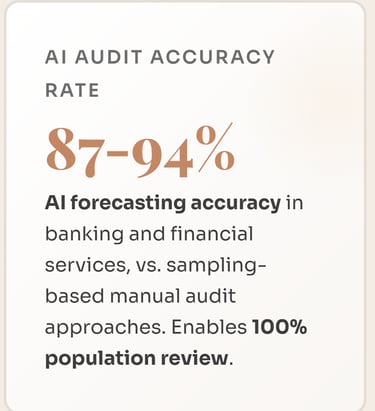
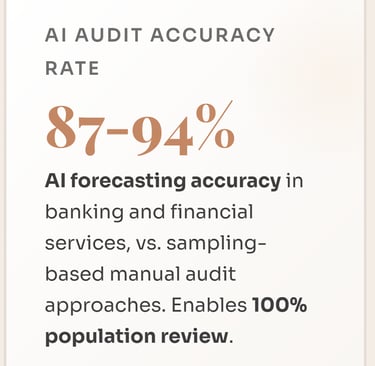
The Structural Advantage: AI can evaluate 100% of data populations rather than relying on selective review. Becker and Olaoye's peer-reviewed study in banking and financial services highlights this advantage, with predictive forecasting accuracy rates of 87% to 94%.
For firms operating in regulated environments, this points to a dual benefit:
Reduced Cost: AI reduces the cost of assurance activities through broader coverage at lower marginal effort.
Improved Quality: Stronger oversight quality through improved consistency in pattern detection across large datasets.
Scaled Coverage: Where manual review has historically been narrow, slow, or difficult to scale, AI enables comprehensive analysis.
This is not theoretical. Firms are already capturing these benefits in operations, moving from compliance as cost-center to compliance as strategic advantage.
Workforce Models Are Being Reshaped
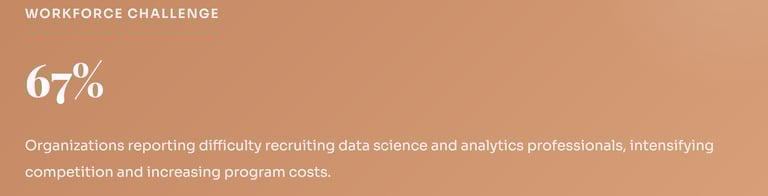
The audit of AI versus manual work is not only about process performance. It is also becoming a workforce question. Thomson Reuters highlights a growing "human capital chasm" in the audit profession, where AI is increasingly being treated as a workforce solution for high-volume, repetitive analysis once assigned to junior staff.
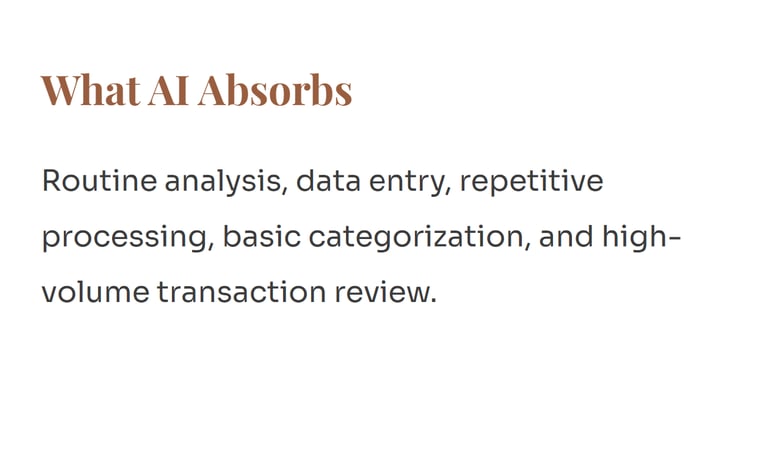
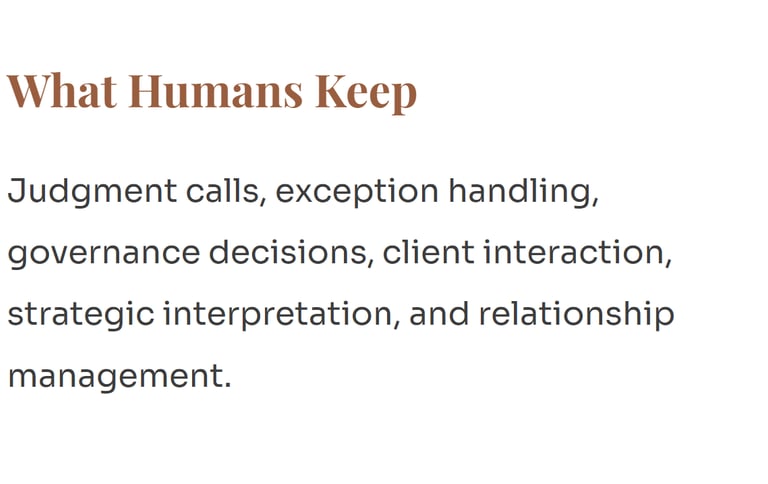
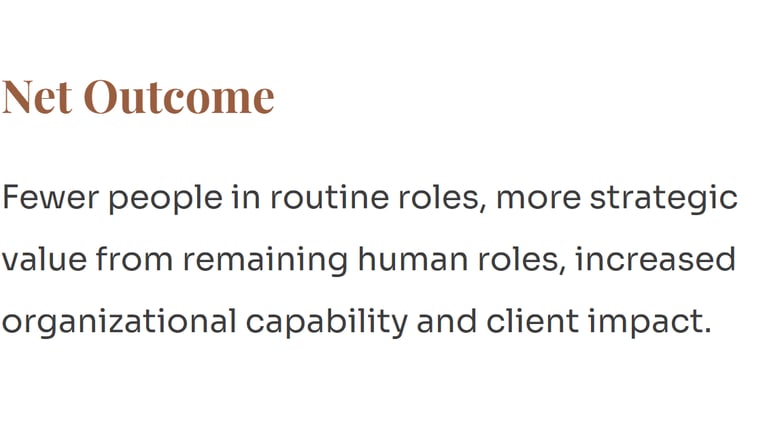
This has broader implications than simple labor substitution. As AI absorbs routine analysis, organizations may need fewer people focused on basic processing and more people focused on judgment, exception handling, governance, and client-facing interpretation.
For leaders, this raises an important organizational challenge: efficiency gains will depend not just on AI deployment, but on whether workforce models, role design, and capability-building keep pace with technological change.
The Next Frontier: Controlled Scale
The evidence across sources suggests that the next stage of the AI efficiency audit will be defined by disciplined scaling. Early experimentation is giving way to more targeted deployments in functions where manual work creates friction, delay, and avoidable cost. But scaling successfully will depend on governance, role clarity, and a realistic understanding of where AI can outperform humans and where human oversight remains essential.
The strategic approach that is emerging follows a clear pattern:
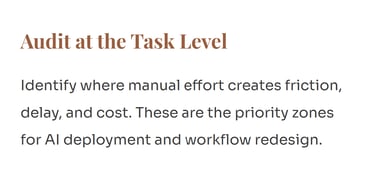
Disciplined Scaling Strategy: Audit work at the task level, identify manual bottlenecks, and redesign high-volume workflows around AI agents where the business case is already visible. Organizations that do this well can unlock faster execution, broader analytical coverage, and more resilient operating models.
Organizations that remain tied to manual-first processes risk preserving cost and complexity that competitors are already removing. The efficiency gains are not hypothetical—they are measurable, demonstrated, and accelerating.
Strategic Takeaways
The audit of AI versus manual work is settling the efficiency debate with data. The strongest returns are likely to come from:
The evidence is clear: organizations that audit methodically, design workflows around AI capability, and invest in the organizational structures to support change will capture compounding efficiency gains. Those that do not will be left preserving cost and complexity that the competitive landscape is rapidly eliminating.
Sources and References:
Data and findings referenced in this report come from publicly available analyses by leading research organizations and peer-reviewed research:
BCG. (2026, January 6). How AI is paying off in the tech function. https://www.bcg.com/publications/2026/how-ai-is-paying-off-in-the-tech-function,
Deloitte Global. (2026). The state of AI in the enterprise: 2026 AI report. https://www.deloitte.com/dk/en/issues/generative-ai/state-of-ai-in-enterprise.html,
McKinsey & Company. (2026, February 19). The state of organizations 2026: Three tectonic forces that are reshaping organizations. https://www.mckinsey.com/capabilities/people-and-organizational-performance/our-insights/the-state-of-organizations,
Becker, K., & Olaoye, A. (2024). Enhancing audit quality and reducing costs: The impact of AI in banking and financial services. Journal of Financial Assurance. https://pmc.ncbi.nlm.nih.gov/articles/PMC12876229/
PwC. (2026). 2026 AI business predictions. https://www.pwc.com/us/en/tech-effect/ai-analytics/ai-predictions.html,
Thomson Reuters. (2026, March 30). The state of AI in audit 2026: Seven questions shaping the future. https://tax.thomsonreuters.com/blog/state-of-ai-in-audit/,
We turn market complexity into executive decisions
Get in Touch
© 2026. All rights reserved.