
Europe's Pet Economy at an Inflection Point
Premiumization, Humanization, and Digital Growth
LINO Consulting & Research GmbH
3/31/20264 min read


Executive Summary
The European pet industry is undergoing a structural transformation. While overall market growth remains steady, the sources of value creation are shifting significantly. Increasing pet ownership, rising per-pet spending, and the humanization of pets are driving demand particularly in the pet food segment, which remains the industry's economic core.
At the same time, digitalization, product innovation, and sustainability considerations are reshaping competitive dynamics. For industry leaders, the central challenge is no longer capturing growth alone, but capturing the right value pools in an increasingly differentiated market.
Key Market Metrics
A Resilient Market with Evolving Growth Dynamics
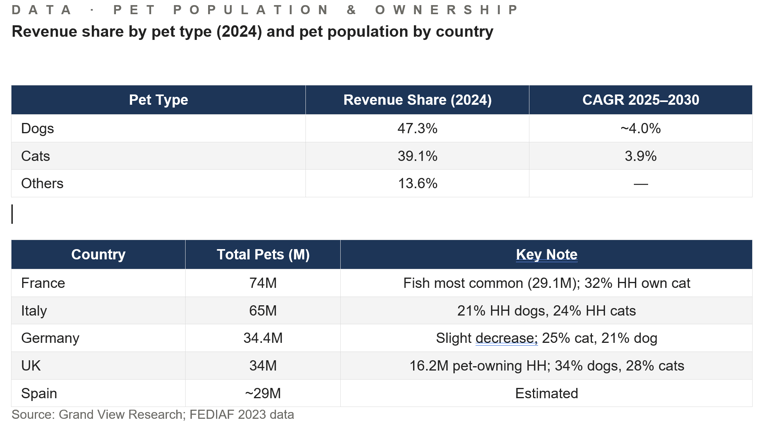
The European pet market continues to expand at a steady pace, supported by long-term demographic and behavioural trends. Rising pet ownership across key markets, combined with increased spending per pet, provides a stable foundation for growth.
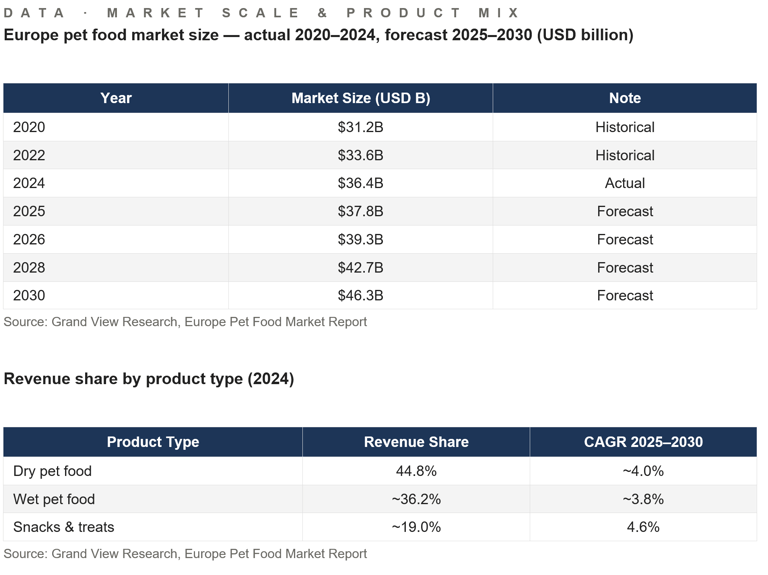
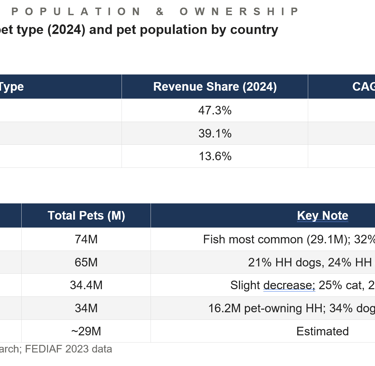
Pet food accounts for the largest share of industry revenue and remains the primary growth driver. However, growth is increasingly value-driven rather than volume-driven. Consumers are allocating more of their spending toward higher-quality products, shifting demand toward premium and specialized segments.
This transition is reshaping the competitive landscape. Companies that rely primarily on scale and cost efficiency are facing increasing pressure, while those positioned in higher-value segments are capturing disproportionate growth.
Humanization is Redefining Consumption Patterns
A central driver of change is the continued humanization of pets. Pets are increasingly treated as members of the family, influencing how owners make purchasing decisions.
This shift is evident in the growing demand for natural, organic, and nutritionally optimized products. Consumers are placing greater emphasis on ingredient quality, transparency, and functional benefits including products tailored to specific health conditions, life stages, or dietary requirements.
As a result, pet food is evolving from a basic necessity into a health- and wellness-oriented category. This evolution is reinforcing premiumization trends and raising expectations for product quality and differentiation.Brand positioning and product credibility are becoming as important as price and availability.
Pet Food is Emerging as an Innovation-Driven Growth Engine
The pet food segment is becoming increasingly dynamic, driven by continuous innovation in product formulation, ingredients, and formats. Growth is particularly strong in premium and specialized categories, including functional diets and high-quality treats. These segments benefit from both higher margins and stronger consumer engagement.At the same time, innovation is increasing operational complexity. Companies must manage shorter product cycles, invest in research and development, and ensure compliance with evolving regulatory standards. This creates a dual challenge:
The dual innovation challenge
• Accelerate innovation to meet changing consumer expectations
• Maintain efficiency and scalability in production and distribution
Organizations that can balance these priorities are better positioned to sustain long-term growth.
Digital Channels are Reshaping the Customer Interface
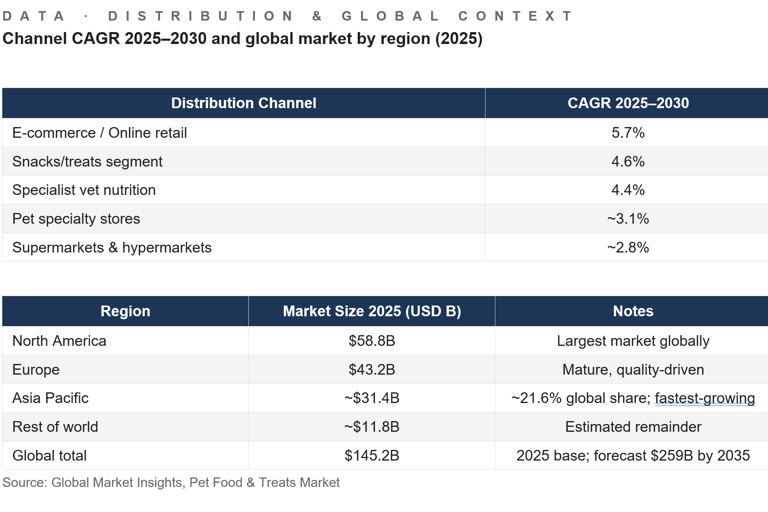
Digitalization is transforming how consumers interact with pet care brands. Online platforms are becoming increasingly important as purchasing channels, driven by convenience, product variety, and the growing adoption of subscription models.
Beyond distribution, digital channels enable companies to capture valuable customer data. This allows for more personalized offerings, improved customer targeting, and stronger retention strategies. As a result, competitive advantage is shifting toward companies that can integrate product excellence with digital capabilities.
Health, Sustainability, and Regulation are Raising the Bar
As the market matures, consumer expectations are expanding beyond traditional factors such as price and convenience. Health and nutrition remain central to purchasing decisions, with increasing demand for products that support preventive care and long-term wellbeing.
At the same time, sustainability considerations such as responsible sourcing and environmentally friendly packaging are gaining importance. European regulatory frameworks further shape the industry by setting high standards for product safety, labelling, and quality. These requirements increase complexity but also create opportunities for differentiation among compliant and high-quality providers.
For companies, success will depend on their ability to align product development, operations, and branding with these evolving expectations.
Conclusion: From Products to Integrated Pet Care Ecosystems
The European pet industry is entering a new phase of development characterised by higher expectations, greater complexity, and more differentiated value creation. Looking ahead, growth will be driven by three converging forces:
The industry is gradually shifting from a product-centric model toward integrated pet care ecosystems, where value is created through a combination of nutrition, services, and digital interaction.
For industry leaders, the strategic imperative is clear. Success will depend on the ability to identify emerging value pools, invest in innovation and digital capabilities, and build strong, trust-based relationships with increasingly sophisticated consumers. Companies that can execute on these priorities will not only capture growth they will help define the future of the European pet economy.


We turn market complexity into executive decisions
Get in Touch
© 2026. All rights reserved.